
20 romance scam red flags you should never ignore

Romance scam red flags often appear early, but they can be easy to overlook when emotions are involved. Rather than leading with financial requests, scammers invest time in creating trust and emotional dependency.
This guide breaks down the most common romance scam red flags into clear categories so you can spot problems early before feelings (or finances) get tangled up.
Personal red flags
1. They refuse spontaneous video calls
They always have an excuse—bad camera, poor signal, work restrictions—and never agree to a quick, unplanned video chat.
2. Their photos look too polished
Catfishing photos appear overly polished or staged, with little variation or everyday context. A reverse image search may reveal the images belong to someone else.
3. No verifiable digital footprint
You can’t find them on LinkedIn®, Instagram®, Facebook®, or anywhere outside the dating app—or the accounts are brand new.
4. Inconsistent age, job, or location
Details change over time: different birthdates, cities, employers, or timelines that don’t quite add up.
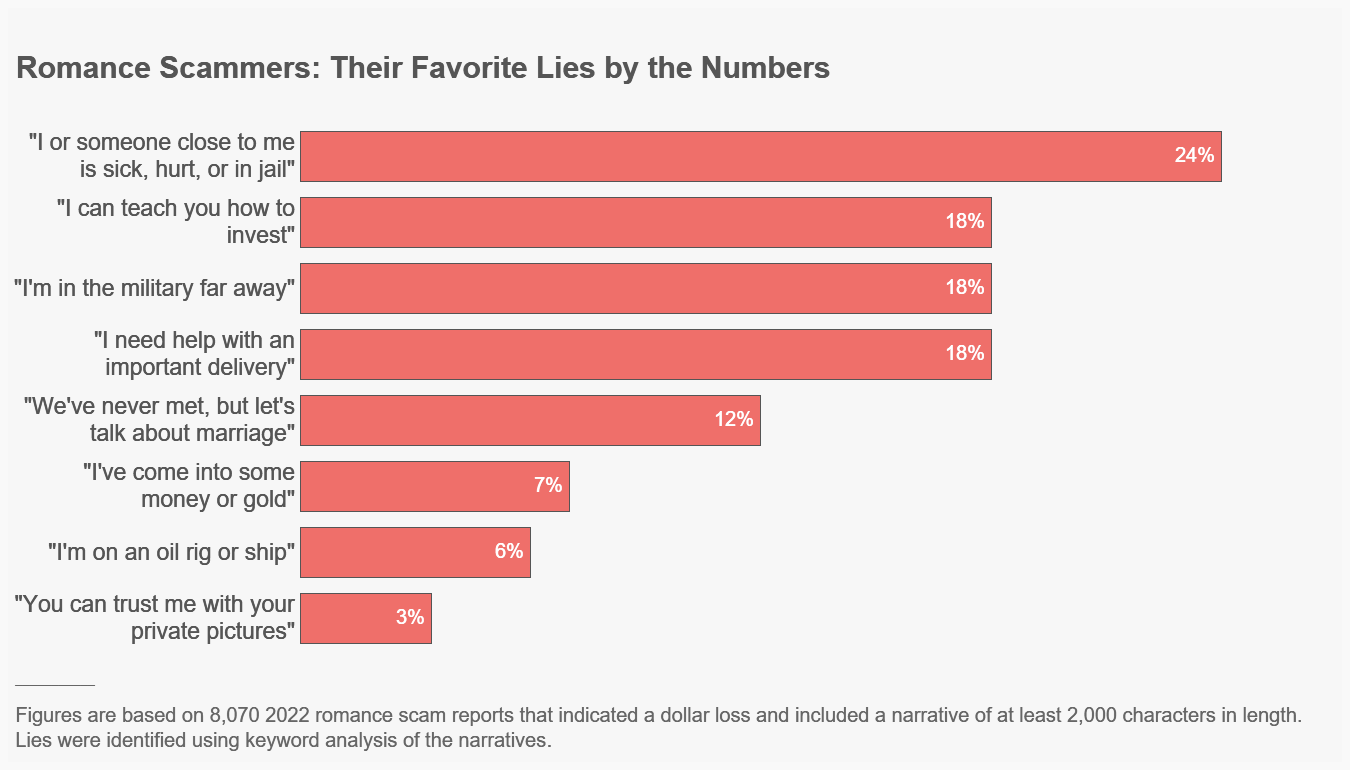
5. They claim an “unreachable” job
Common examples include overseas engineers, oil rig workers, military contractors, or doctors on humanitarian missions.
Emotional and psychological red flags
6. Love bombing
They move fast: constant compliments, intense affection, or declarations of love within days or weeks.
7. Future faking
They talk about marriage, moving in, or building a life together before you’ve even met.
8. Emotional mirroring
They conveniently share the same values, hobbies, trauma, or life goals. You may catch yourself thinking it’s too good to be true.
9. False vulnerability stories
Scammers may introduce tragic personal stories early on—loss, betrayal, illness, or loneliness—to build sympathy and emotional attachment.
10. Guilt-trip appeals
They imply you’re hurting them by asking questions or setting boundaries: “If you really cared, you’d trust me.”
11. Hot-and-cold behavior
Affection comes and goes—warm one day, distant the next—keeping you emotionally hooked and chasing reassurance.
Behavioral red flags
12. Messaging around the clock
They message constantly, often across time zones, creating emotional dependency and crowding out real-life connections.
13. Avoiding direct questions
Simple questions get vague answers, deflections, or emotional responses instead of clarity.
14. Asking for secrecy
They encourage you not to tell friends or family, claiming others “wouldn’t understand” your connection—thus keeping the scammer in control.
15. Pushing you off the dating app
They quickly move conversations to WhatsApp®, Telegram®, or Signal®, all platforms with less moderation and more anonymity.
16. Scarcity creation
They imply limited time or rare opportunities: “We have to act now,” or “This chance won’t come again.”
Financial red flags
17. Sudden emergencies
A crisis appears like medical bills, frozen accounts, or travel issues just as trust has been established.
18. Investment grooming scripts
They introduce “safe” crypto or investment opportunities, often with screenshots of fake profits.
19. Asking for financial info
They ask for banking details, gift cards, wire transfers, or crypto, usually claiming it’s just a temporary favor.
20. Pressure through sunk costs or threats
They say you’ve already invested too much to stop now, or they resort to shame, anger, or threats when you hesitate.
Download the romance scam red flag checklist →What to do if you spot multiple romance scam red flags
If you’re seeing some of these red flags in your relationship, pause. Scammers rely on momentum.
If something feels off, take these steps:
- Stop sharing personal or financial information. This includes your address, workplace, ID details, banking information, or login codes.
- Reverse-image search profile photos. Stolen or reused images are common in romance scams.
- Ask for a spontaneous video call. A real person should be able to show up without advance notice or repeated excuses.
- Report the profile to the dating platform. This helps protect others and may prevent the scammer from targeting new people.
- Block communication if pressure continues. You don’t owe continued access to anyone who ignores your boundaries.
- Never send money, crypto, or gift cards. These payment methods are a common point of no return.
If you feel uncomfortable or rushed, trust that gut reaction. Discomfort is often the earliest warning sign. If you’ve already sent money to a scammer and aren’t sure what to do, read this guide on the best next steps.
- Romance scammers rely on urgency, secrecy, and psychological tactics
- Romance scams tend to escalate from emotional manipulation to financial pressure
- Any request involving gift cards, wire transfers, crypto, or ‘investment’ platforms should be treated as a scam until proven otherwise
- Identity monitoring and scam-loss protection can help protect you if something goes wrong
How to report a romance scam
Reporting a romance scam helps protect others and can improve the chances of stopping repeat offenders. Even if you didn’t lose money, reporting still matters.
Step 1: Report the profile on the platform
Use the built-in reporting tools on the dating app or social network where you met them. Choose options related to scams, fraud, or impersonation and include any relevant details.
Step 2: Save evidence
Before blocking the account, save screenshots of:
- Messages and usernames
- Profile photos and descriptions
- Payment requests, links, or wallet addresses
- Any names, phone numbers, or email addresses used
This information may be needed for further reports.
Step 3: Report to the FTC
File a report at reportfraud.ftc.gov. This helps track scam patterns and supports consumer protection efforts, even if no money was sent.
Step 4: Contact your bank or payment provider
If you shared financial information or sent money, notify your bank, card issuer, or payment app immediately. Acting quickly can sometimes limit further damage.
Step 5: Block and cut off contact
Once reports are submitted, block the scammer across all platforms. Do not engage further. Continued contact often leads to more pressure or manipulation.
Reporting isn’t embarrassing, and you’re not alone. Romance scams are designed to exploit trust, not intelligence. Speaking up helps prevent others from being targeted.
How OmniWatch helps protect you from romance scams
Romance scams don’t just cause emotional harm; they can also lead to identity theft, drained accounts, and long-term financial stress. In 2023, reported losses to romance scams totaled $1.14 billion, with median losses per person of $2,000—the highest reported losses for any form of imposter scam. Even cautious people can be targeted when scams are designed to feel personal, urgent, and real.
In many cases, banks won’t reimburse losses if money was willingly sent, even if it was sent under false pretenses. Payments made through wire transfers, peer-to-peer apps, gift cards, or cryptocurrency are often excluded from traditional fraud protection.
OmniWatch provides an added layer of protection by helping you spot problems early and offering support if something goes wrong. Support may include:
- Monitoring for identity misuse and suspicious activity
- Alerting you if your personal information is compromised
- Offering scam insurance on eligible plans (Exclusions and limitations apply)
Frequently asked questions
Q: How many romance scam red flags mean danger?
A: One red flag on its own doesn’t automatically mean someone is a scammer. However, multiple red flags appearing together (especially across different areas like identity, behavior, and finances) are a strong warning sign.
The risk increases significantly once secrecy, urgency, or requests involving money or personal information enter the conversation. When patterns start to repeat, it’s time to slow down and reassess.
Q: Are romance scams common on dating apps?
A: Yes. Dating apps and social media platforms are among the most common entry points for romance scams. These platforms make it easy for scammers to create convincing profiles, contact many people at once, and disappear quickly if reported.
Messaging apps and social networks are also frequently used after initial contact, especially when conversations move off-platform.
Q: What’s the #1 sign of a romance scammer?
A: Pressure. Romance scammers consistently push for quick emotional commitment or fast financial decisions.
This pressure is often paired with urgency, secrecy, or emotional manipulation designed to limit your ability to verify details, think critically, or get advice from others. When someone discourages questions or outside input, it’s a serious red flag.
Q: Can someone be a romance scammer even if you’ve video chatted?
A: Yes. While live video calls can reduce risk, they aren’t a guarantee. Some scammers use pre-recorded video, impersonation, or AI-generated deepfake technology to appear legitimate.