
 Call us at (877) 892-8249

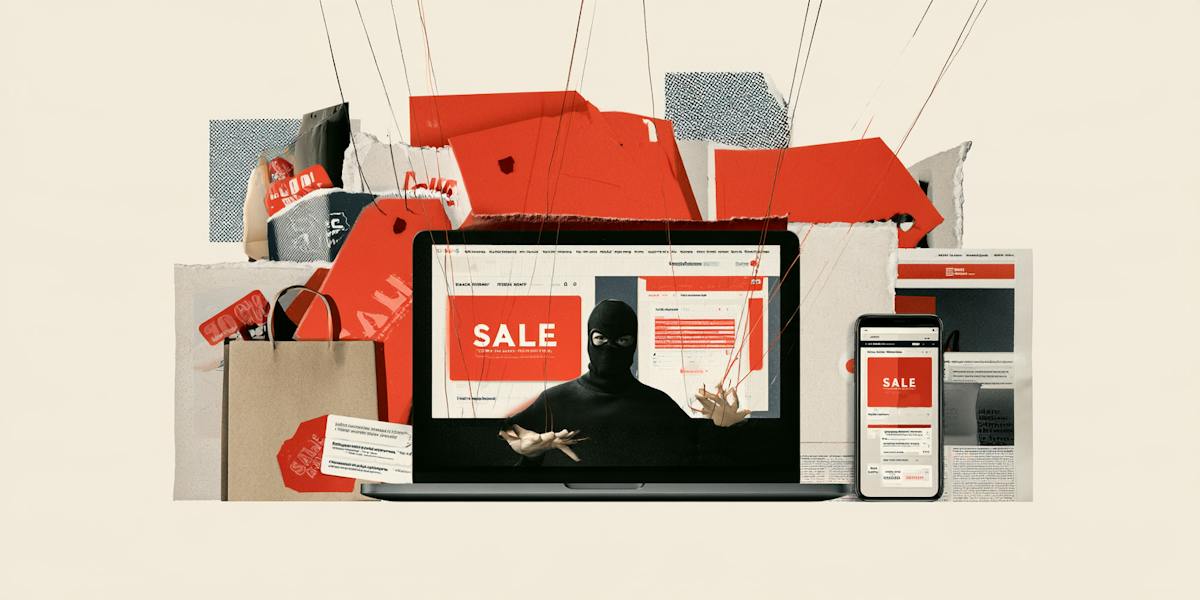
Picture this: A tablet you’ve been wanting since August is 65% off. A countdown clock is running next to the price, a red banner says, “only two left!”, and you’re tempted to click the buy button. Scammers know that feeling, so they dangle fake offers, hoping you’ll click before you’ve checked a thing.
Black Friday and Cyber Monday fill your inbox, feed, and phone with ads, emails, and delivery texts, making real offers hard to spot among the fakes. The good news is that the fakes follow patterns, and a few quick checks can help you catch them.
Below, we’ll show you what to look for and what to do if you’ve already paid on a fake retailer site, so you can keep hunting for real deals with confidence.
Quick answer
Black Friday and Cyber Monday scams are fake deals, lookalike sites, and phony delivery texts that try to steal your money or personal information. They show up when shopping peaks, because scammers count on shoppers rushing to find deals. According to the Better Business Bureau (BBB), Cyber Monday is one of the season’s biggest days for online spending. The BBB also warns that scammers copy popular stores to lure shoppers with deals that seem too good to be true. The biggest red flag is pressure to hurry on a site you didn’t navigate to yourself.
Key takeaways
- Pressure to hurry is a warning sign. If a timer or a stock warning is nudging you to buy now, type the store’s address into your browser and see whether the offer is there.
- A page that looks right can still be fake. Check the web address for misspellings before you pay.
- Treat unexpected delivery texts and gift card balance sites as unconfirmed. Verify them on the store’s or carrier’s own site before you click or share any numbers.
- A real deal holds up to a second look. Check what other stores charge, what the return rules say, and whether your payment method lets you dispute a bad charge.
- Speed matters if you already paid on a fake site. Contact your card company first, then back it up with your evidence and a report to the Federal Trade Commission (FTC).
How exposed is your personal information?
Take our free risk quiz to see where your data may be exposed online.
Take the Risk Quiz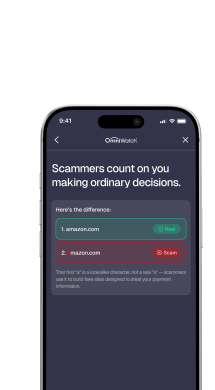
What are Black Friday and Cyber Monday scams?
Black Friday and Cyber Monday scams are online shopping schemes built to steal your card details or personal information. They show up as bogus online stores, social media ads, emails, and delivery texts.
The holiday rush works in their favor. You’re hunting for deals, waiting on packages, and sorting through an inbox full of real and fake messages. So watch for a steep discount on a hard-to-find gift, especially if a countdown timer or a “low stock” notice is hurrying you along.
Why do scams spike during Black Friday and Cyber Monday?
Scams spike because the shopping season runs on short deadlines, and short deadlines make people skip the checks that would expose a scam. Fake countdown timers and false low-stock messages push you to buy right away, per the FTC. These tricks play on mental shortcuts and can keep you from the details you need to make a good decision.
The FTC says reported losses from scams that start on social media were about eight times higher in 2025 than in 2020. Shopping scams were the most reported type of social media scam, and many begin with an ad that leads to an unfamiliar site or one that impersonates a well-known brand. That’s why the BBB encourages shoppers to pause and check before they buy, even when a clock is ticking.
What do fake Black Friday websites and ads look like?
A fake Black Friday site can look just like the real store you’re used to. Scammers copy a retailer’s logo, typefaces, and product images, so a polished design doesn’t prove it’s legitimate. They also use recognizable names and run ads in social media feeds and search results.
When JOANN closed its stores in 2025, people reported seeing fake JOANN sale ads on Facebook, Pinterest, and Nextdoor. BBB Scam Tracker’s 2025 report named PayPal as the most impersonated organization, with Amazon and Target next. The same fake-storefront trick shows up in online marketplace scams.
The web address usually gives fakes away. A typosquatted address (a lookalike with a small typo) might misspell a store’s name, and the Federal Bureau of Investigation (FBI) has reported bogus shopping sites that end in .top or .club instead of .com.
What are the most common Black Friday and Cyber Monday text and email scams?
Watch for two scams in your texts and emails: fake delivery notices and fake gift card balance checkers. When people told the FTC how a scammer reached them in 2025, text messages topped the list. The BBB’s data points the same direction. Text scams rose from 9.8% of its Scam Tracker reports in 2024 to 14.9% in 2025.
Fake delivery notices
A typical fake notice, sent by text or email, says your package is stuck and asks for a small fee to resend it.
Here’s an example of a notice you might see: “USPS: We couldn’t deliver your package. Pay a $1.50 fee to reschedule: [link].”
In the FTC’s most recent breakdown of text scams, which covers 2024 reports, this type of text was the most commonly reported. The sender usually poses as the U.S. Postal Service, and the link opens a copy of the USPS website. People who paid the “redelivery fee” gave away their card number, and some gave away their Social Security number.
Cyber Monday also opens the busiest delivery season, so one more shipping alert looks normal.
Tip: Skip the link and check your order on the store’s website, then forward the text to 7726 (SPAM). Not sure about a message? Check whether USPS texts and Amazon texts are safe, and learn how smishing (text-message phishing) works.
Fake gift card balance checkers
BBB Scam Tracker has received reports of gift card “balance checker” sites that exist to collect card numbers and PINs. With those codes, a scammer can empty the card.
Tip: Stick to the retailer when you check a balance. Visit its website or call the phone number printed on the back of the card.
How can you verify a deal or website is real before you pay?
Here’s how you can confirm a deal is real before you enter your card number:
Verify the offer at the source. If an ad, text, or email led you to the deal, open the store’s website yourself instead of clicking through. Check that it lists the same offer.
Compare the prices at other stores. Complaints to the FBI show that low prices lured many victims of fake shopping sites, which undercut other online stores. The BBB also points out that a posted discount isn’t always a real saving, since some retailers pad their sale prices.
Read the return policy and check the contact details. Stores can set different return rules for Cyber Monday deals, and final-sale items may not be returnable, so read the policy before you buy. Then confirm the phone number and address belong to the store, and check whether the site is legit if the store is new to you.
Pay with a credit card. You can dispute a credit card transaction when an order never arrives, and the FTC says a debit card may not get you a refund for non-delivery. The BBB warns against wire transfers, and the FTC cautions that anyone who demands a gift card as payment is a scammer. Debit card protections vary, so if you pay that way and something goes wrong, call your bank right away.
What should you do if you already entered payment info on a fake site?
Take these four steps, in order:
Call your card issuer or bank right away. Explain that the site was fake and ask them to reverse the payment, then confirm your dispute in writing. Don’t wait on the seller, because the legal window to dispute a credit card billing error is 60 days from the statement that shows it.
Screenshot the evidence. Capture the ad, the site, your order email, and any tracking page, since fraudulent sites can vanish quickly.
Report the scam. File a report at ReportFraud.ftc.gov, and flag the ad to the social media site that ran it.
Check your accounts. Look for other unauthorized charges on your cards and bank accounts. If you typed a password on the site, change it, and change it anywhere you reuse it.
Stay secure with OmniWatch

Before you tap or pay, you can paste a link or text into OmniWatch’s Scam Protection Center, or share a screenshot, to see whether it looks suspicious. If a scam still gets through, OmniWatch plans include scam insurance that can reimburse eligible losses, up to $50,000 on individual plans.
Frequently asked questions
Are Black Friday deals from social media ads ever legit?
Black Friday deals from social media ads can be legit, but platforms don’t always check the ads or the advertisers, so scammers take advantage. Before you buy, search the company’s name plus the word “scam” or “complaint.”
How can I tell if a “limited time” countdown timer is fake?
A “limited time” countdown timer is likely fake if it restarts or disappears when it hits zero and the sale keeps going. The FTC calls timers on offers that aren’t truly time-limited a “dark pattern,” meaning a design trick meant to rush you.
Is it safe to click a link in a Black Friday or Cyber Monday delivery text?
No, it’s not safe to click a link in an unexpected Black Friday or Cyber Monday delivery text. The link can lead to a copycat site that records everything you type, or it can load harmful software that steals your data. If you think the text could be real, check your order on the store’s website.
Do legitimate stores ever ask you to pay by checking a gift card’s balance online?
No, a legitimate store won’t demand a gift card as payment. A site that asks for your gift card number and PIN to “check the balance” may also be a scam. With those details, scammers can empty the card.
Can my bank or credit card company reverse a charge from a fake Black Friday site?
Yes, your bank or credit card company can often reverse a charge from a fake Black Friday site. Credit cards usually give you more protection than debit cards. When you use a credit card, you can dispute an order that never arrived, and the card company may reverse it (called a chargeback).
Can a Black Friday scam lead to identity theft?
It’s possible. A Black Friday scam could lead to identity theft if you give a fake retailer or phishing site sensitive information, such as your password, credit card number, or Social Security number. Scammers can then use those details to access your accounts or commit other forms of identity fraud.

This guide is published by OmniWatch, an identity and scam protection company. Follow OmniWatch on LinkedIn for ongoing guidance on identity protection and digital safety.
Sources
Federal Trade Commission (FTC), “Bringing Dark Patterns to Light.”
Federal Trade Commission (FTC), “New FTC Data Show People Have Lost Billions to Social Media Scams.”
Federal Trade Commission (FTC), “Avoid online JOANN impersonators and their fake sales.”
Better Business Bureau (BBB), “2025 BBB Scam Tracker 2025 Report.”
Federal Bureau of Investigation (FBI), “FBI Sees Rise In Online Shopping Scams.”
Federal Bureau of Investigation (FBI), “Cyber Actors Exploit 'Secure' Websites In Phishing Campaigns.”
Federal Trade Commission (FTC), “The Rising Scam Economy: Modernizing Federal Approaches to Protect Americans from Foreign Fraudsters.”
Better Business Bureau (BBB), “Shop with confidence on Cyber Monday.”
Federal Trade Commission, “Top text scams of 2024.”
Better Business Bureau (BBB), “BBB Tip: Don't get scammed out of a gift card.”
Federal Trade Commission (FTC), “What To Do if You’re Billed for Things You Never Got, or You Get Unordered Products.”
Federal Trade Commission (FTC), “Asked to pay by gift card? Don’t.”
Federal Trade Commission (FTC), “FTC Report Shows Rise in Sophisticated Dark Patterns Designed to Trick and Trap Consumers.”