
How to prevent identity theft during tax season: 15 smart ways to protect your refund

Tax season should mean one thing: getting your refund.
But for hundreds of thousands of Americans each year, it turns into tax identity theft, refund fraud, and months of paperwork trying to prove they are who they say they are.1 In some cases, the IRS is taking up to two years to resolve taxpayers’ identity theft cases.
Criminals know that between January and April:
- Millions of Social Security numbers (SSN) are transmitted
- W-9 forms are exchanged
- Employers issue W-2s and 1099s
- Tax software accounts are accessed
- Refunds are processed in large batches
All that sensitive information moving around at once makes filing season one of the riskiest times of year for tax scams and refund fraud.
If someone files a fraudulent tax return in your name:
- Your refund can be delayed for months
- The IRS may reject your legitimate return
- You may need to file Form 14039 (Identity Theft Affidavit)
- You could spend dozens—or even hundreds—of hours resolving the issue
The good news? Most tax refund fraud is preventable.
If you take the right precautions before you file, you can dramatically reduce the risk of someone filing taxes in your name or stealing your refund.
- File early
- Freeze your credit
- Use secure Wi-Fi
- Enable multi-factor authentication
- Set up an IRS IP PIN
- Monitor your credit weekly
- Check for data breach exposure
- Never click refund links in texts or emails
Why tax identity theft spikes during filing season
Tax identity theft rises sharply during filing season. Here’s why.
Refunds create immediate financial incentive
Tax season is one of the only times of year when the federal government sends out millions of payments at once.
Tax refund fraud is attractive to criminals because:
- Refunds can be thousands of dollars
- Payments are processed quickly
- Direct deposit is common
- Fraud can occur before victims notice
Unlike credit card fraud, which is often flagged quickly, a fraudulent tax return may not be discovered until you attempt to file your own.
Social Security numbers are widely shared
During tax season, more people are transmitting sensitive data simultaneously. Employers are sending forms, tax preparers are collecting SSNs, and tax software accounts are accessed. The number of times your Social Security number is shared goes up significantly.
Every time your data changes hands, there’s another chance for it to be exposed, particularly in environments vulnerable to phishing or data compromise.
Scammers exploit filing deadlines and confusion
Tax season creates urgency and anxiety. That makes IRS impersonation scams more effective.
Keep an eye out for these sneaky attempts:
- “Refund delay” messages
- “New tax credit” alerts
- “Account verification required” emails
- Threatening IRS impersonation calls
Because taxpayers expect communication from the IRS during this time, fake messages often feel more believable.
The “first-to-file” system favors speed
The IRS processes returns in the order received. So if someone files taxes in your name before you do, the system may accept the fraudulent return first. By the time you file, your legitimate return may be flagged as a duplicate. This is one of the main reasons why filing early is so critical.
How tax refund fraud typically happens
- A scammer obtains your Social Security number from a data breach, phishing attack, or stolen document.
- They file a fraudulent tax return early in the season.
- The refund is requested through a prepaid debit card or mule account.
- When you file your legitimate return, the IRS rejects it as a duplicate.
By the time you discover the issue, the refund may already be issued. Fixing it isn’t quick either—it can take months of back-and-forth with the IRS.
But there’s a way to stay ahead of these cybercriminals. If you file first, secure your accounts, and limit your SSN exposure, you reduce each step of the fraud cycle.
15 smart ways to protect yourself from tax season identity theft
1. File your taxes as early as possible
We can’t emphasize this enough: Tax refund fraud is often a race.
The earlier you file, the less opportunity a scammer has to submit a fraudulent return in your name first. Early filing is one of the simplest and most effective prevention strategies available.
2. Freeze your credit before tax season peaks
Why freeze your credit? Because it prevents new accounts from being opened in your name.
While it doesn’t directly stop someone from filing taxes in your name, it will block related identity theft crimes, such as:
- Fraudulent loans
- Credit cards
- Utility accounts
Credit freezes are free and reversible at all three major credit bureaus:
3. Use secure, private Wi-Fi when filing
Never submit your tax return over public Wi-Fi.
When filing, always use a secure home network and avoid public hotspots. Consider using a VPN to encrypt your traffic and reduce your interception risk.
Tax filing security begins with your internet connection.
4. Don't send a W-9 over unencrypted email
W-9 phishing is common during tax season.
W-9 forms contain your full legal name, address, and Social Security number. Only send tax documents through secure portals or encrypted platforms to avoid unnecessary exposure.
5. Enable multi-factor authentication on tax software
Many IRS tax scams begin with compromised accounts.
Multi-factor authentication (MFA) blocks unauthorized access even if your password is exposed. Turn on MFA for tax software, email accounts, banking apps, and IRS online accounts.
6. Never click "refund verification" links in text or email
Important: The IRS does not initiate contact via text message, email, or social media. Official IRS communications are delivered by mail.
If you receive a message claiming your refund is delayed or needs verification, go directly to IRS.gov manually. Never click embedded links.
7. Monitor your credit activity weekly during tax season
Tax identity theft can be a slippery slope into additional financial fraud.
It’s a smart idea to monitor your credit to check for things like new accounts, hard inquiries, address changes, or loan activity.
8. Set up an IRS Identity Protection PIN
An IRS IP PIN is a six-digit number required to file your return.
Even if a scammer has your Social Security number, they cannot file without your IP PIN.
This is one of the most underutilized yet powerful tools to prevent tax refund fraud—and it’s recommended by the government.
9. Check for data breach exposure before filing
Many cases of IRS tax identity theft start with previously leaked data.
Before submitting your return, consider checking whether your personal data is circulating online. Tools like dark web monitoring can alert you if your Social Security number or email address has been exposed in a breach.
This will help you to freeze your credit if necessary, set up an IP PIN, and strengthen your account security overall before you go to file.
Before you submit your return, take 60 seconds to check whether your email address has already been exposed.
Run a free scan →10. Use strong, unique passwords for financial accounts
We’ve all heard this one before. Don’t reuse passwords across your email, banking, tax software, and investment platforms. Instead, consider a password manager that can generate secure passwords and remember them for you.
11. Shred old tax documents
Paper tax records contain SSNs, income history, employer information, and dependent data. Use a cross-cut shredder before discarding any old tax paperwork.
12. Beware of "new tax credit" enrollment offers
When tax laws change, scammers move quickly. Always verify new credit eligibility directly through official IRS resources. Unsolicited enrollment messages are red flags.
If you’re unsure how recent legislation may affect you, review the details of the current tax plan directly from official sources.
13. Verify accountant or payroll requests directly
Business email compromise scams increase during filing season. If you receive a request to send tax forms or update banking details, call the organization using a verified phone number. Don’t rely solely on email communication.
14. Sign up for a fraud alert
A fraud alert tells lenders to verify your identity before opening new accounts. It’s free and lasts for one year. Pairing it with other protections like a credit freeze can add an extra layer of security during tax season.
15. Continue monitoring even after filing
Identity theft doesn’t stop once your refund arrives. Stolen tax data can be reused months later for load fraud, government benefit fraud, medical identity theft, and more.
Filing online? Add a few extra safeguards
Tax season means you’re sharing more personal information than usual. Protect yourself with:
- Secure browsing when filing online
- Monitoring for identity misuse
- Scam detection tools
- Alerts for unusual financial activity
What to do if you suspect tax identity theft
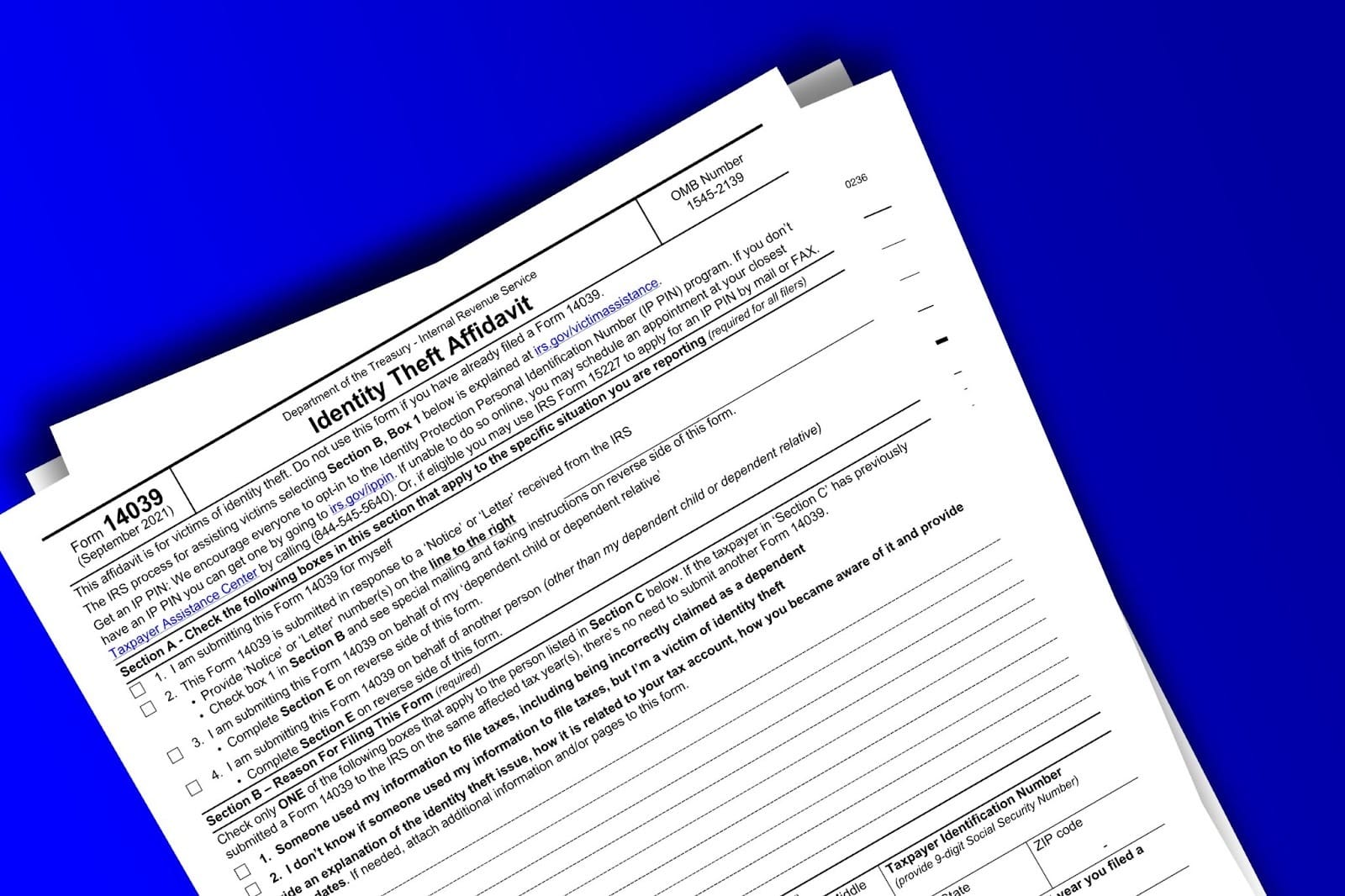
If someone has filed taxes in your name, act immediately:
- File IRS Form 14039 (Identity Theft Affidavit)
- Freeze your credit at all three major credit bureaus
- Monitor your financial accounts daily
- Report identity theft to the FTC
- Contact your tax preparer if applicable
Protect your refund before it’s at risk
Tax identity theft is frustrating, but it can be prevented. Filing early, securing your accounts, and monitoring your information can significantly reduce the risk of refund fraud.
Before filing your return this year, take a few minutes to tighten your security. It’s a small step that can prevent a much bigger problem.
If you want an extra layer of support, tools like identity theft protection, secure browsing, and scam detection can help you stay ahead of problems instead of reacting to them.
Learn more →Frequently asked questions
Q: How common is tax identity theft?
A: Hundreds of thousands of taxpayers experience tax-related identity theft each year.1 In most cases, victims are unaware that their information has been misused until their legitimate return is rejected or their refund is delayed.
Tax refund fraud increases during filing season because scammers attempt to submit fraudulent returns before real taxpayers file. When that happens, resolving the issue often requires identity verification and working directly with the IRS.
Q: How do I know if someone filed taxes in my name?
A: If a scammer has your Social Security number and basic identifying details, they can attempt to file a fraudulent tax return in your name.
You may receive an IRS notice stating that a return has already been submitted using your Social Security number. You might also have your legitimate return rejected as a duplicate. In some cases, you won’t discover the fraud until your expected refund doesn’t arrive.
Q: Does freezing credit stop tax refund fraud?
No. A credit freeze does not directly prevent someone from filing a fraudulent tax return in your name. However, it does block new credit accounts, loans, or lines of credit from being opened using your identity. So while it won’t stop tax fraud, it helps prevent related financial identity theft.
Q: What is an IRS IP PIN?
A: An IRS Identity Protection PIN (IP PIN) is a six-digit number you can have issued by the IRS to prevent tax-related identity theft. This number must be entered when filing your federal tax return. This means that even if someone has your Social Security number, they’ll be blocked from filing a return without your IP PIN.
An IRS IP PIN is issued annually, so it does expire each year. You’ll have to request the most recent IP PIN from the IRS when filing your return.
Q: Can tax identity theft affect my credit score?
A: Tax filing fraud does not directly impact your credit score. However, if your stolen information is used to open new accounts or take out loans, it can damage your credit. That’s why monitoring financial activity during tax season is important.
1 IRS, “Identity Theft” (2024). Accessed Feb. 27, 2026.