
 Call us at (877) 892-8249
Key takeaways
- Internal Revenue Service (IRS) impersonation and government scam calls are rapidly increasing, stealing millions from Americans each year.
- The real IRS always contacts you first by mail—not by phone, text, email, or social media.
- Scammers use AI and intimidating threats to pressure victims into making payments immediately.
- Recognizing IRS phone scams is the best way to protect your money and identity.
- If you’ve shared information with a scammer, act quickly to limit damage.
- Use dark web monitoring, identity theft insurance, and scam protection tools to catch scams early and keep your assets safe.
Imagine picking up the phone and hearing someone claim you owe the IRS thousands of dollars—right now, or face arrest. It’s a heart-pounding moment that millions of Americans experience each year, thanks to a new wave of IRS impersonation scams that have quadrupled in volume since 2020.1
These schemes are smarter, scarier, and more convincing than ever, blending artificial intelligence with old-school threats to trick even the savviest taxpayers. If you think you’d never fall for it, think again—these scams are engineered to fool anyone. Here’s how to spot the warning signs and protect yourself before it’s too late.
How fake IRS scams work
How to differentiate IRS calls from real notices
Government imposter red flags to watch out for
What to do if you receive or fall victim to an IRS impersonation call
How to protect yourself from modern scams
What are IRS impersonation calls?
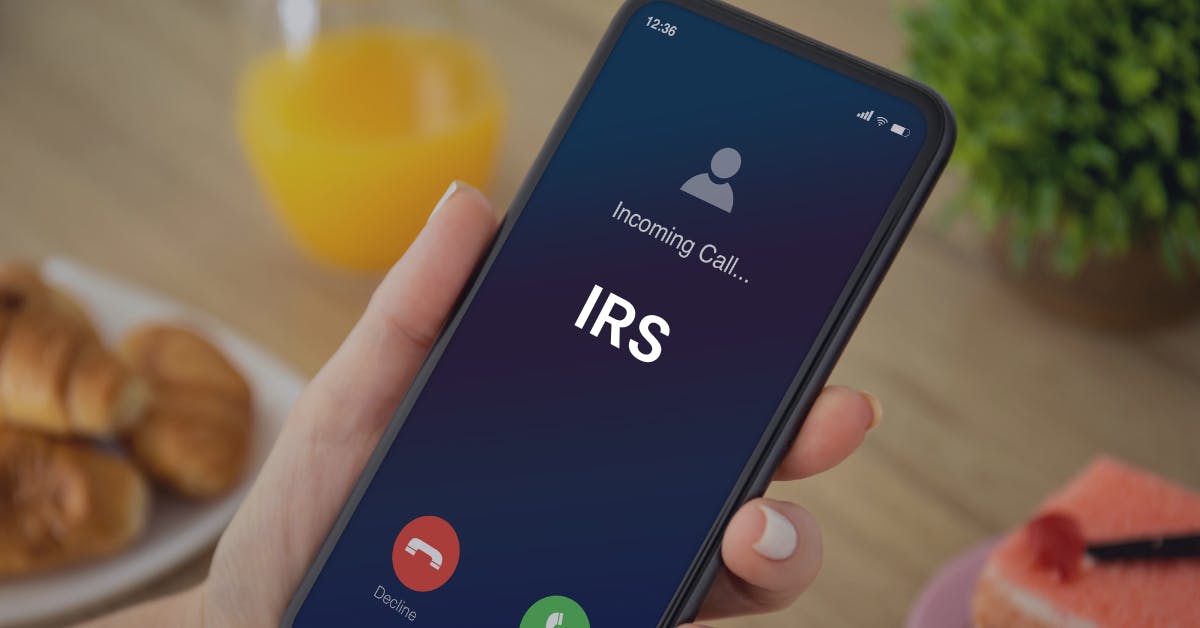
IRS impersonation calls are phone scams where fraudsters pretend to be IRS agents to steal your money or personal information.
These scammers often claim you owe back taxes or face legal trouble, using threats or urgent language to pressure you into paying immediately. They may spoof caller ID to look official, making the scam even more convincing.
Remember: the real IRS will never call, text, or email you out of the blue about taxes; you’ll always get a letter first.
- IRS impersonation calls
- A type of phone scam where fraudsters impersonate government officials from the IRS to steal money or personal information.
How an IRS impersonation scam works
Today’s scammers are deliberate and sophisticated; they use artificial intelligence (AI) and advanced tools to execute believable scams using an arsenal of misleading tactics, including:
Realistic fake voices
Caller ID numbers emulating real IRS offices
Realistic pitches with “helpful” resolutions
Urgent and persuasive messaging
Authentic-looking websites with plausible URLs
Each year, the real IRS publishes its “Dirty Dozen” report, identifying the twelve most egregious scams targeting individuals and organizations alike. This year, AI-generated fake IRS calls were high on the list. While the pitch of each one may vary, these common tax scams generally follow the same basic framework.
Step 1: Initial contact
Tactic: Spoofed caller ID; urgent request for immediate call-back or payment
Watch out for: Caller ID mimicking IRS offices
What to do: Ignore; check your tax records online; flag/report if possible
Step 2: The fake IRS “agent” establishes authority
Tactic: Professional- and official-sounding language; fake case, reference, and badge numbers; reference to real laws or IRS forms
Watch out for: May already have some personal information (name, address, partial SSN, etc.) which is used to gain your trust
What to do: Hang up immediately; do not converse
Step 3: Escalating persuasion
Tactic: Fear/threat-based pressure
Watch out for: Threats of financial penalties (e.g.: late fees), negative credit impact, or warrant for your arrest; immediate resolution if funds received; transfer call to a “supervisor”; warnings not to discuss the call with anyone else
What to do: Disengage and hang up immediately; file a report
Step 4: Demand for immediate, untraceable payment
Tactic: Request payment in unconventional, irreversible, and untraceable methods
Watch out for: Demands for gift cards, wire transfers, cryptocurrency, prepaid debit cards
What to do: Do not pay; hang up; file a report. Remember, the IRS never accepts these forms of payment.
Step 5: Escalation or follow-up
Tactic: Follow-up calls or transfers resulting in more scam attempts
Watch out for: Scammers posing as law enforcement or fraud investigators claiming to help you recover lost funds
What to do: Stop! Disengage immediately and file a report
How does the IRS actually contact you?
For tax issues, overdue balances, and audits, the IRS primarily initiates contact with taxpayers by mail using official letters.
Unexpected contact by any method other than U.S. Postal Service mail should be treated with a high degree of suspicion. If in doubt, check your IRS.gov account. You can view letters sent by the IRS and make payments online.
Only after communication has been established will the IRS communicate with you through other means, usually only with prior consent.2
Other ways the IRS may contact you:
Email: Only with your permission, with a few exceptions like criminal investigations
Text message: Only with your permission
Phone: In some cases, the IRS or official private collectors may call you to resolve issues, but only after they have reached out by mail first
Fax: Usually to verify or request employment information
In-person visit: Very rare, only for specific reasons, and always with prior notice
This is where you could become more vulnerable. Even if you have given permission for the IRS to follow up with these contact methods, we still highly recommend using extreme caution and verifying directly with the IRS to avoid being exposed to any well-timed scams.
Ways the IRS does not contact you:
Send direct messages or take payment with social media
Leave prerecorded messages
Call with automated messages
Send text messages with threats or links to fake IRS websites*
Advertise tax debt resolution by mail
It’s also worth noting that the IRS ceased unannounced in-person visits in 2023 as a safety precaution for both taxpayers and agency employees.3
Why this scam works: the psychology behind it
IRS phone scams are so effective because they exploit specific hardwired human responses: fear, urgency, and deference to authority.
Fear of the IRS has become such a cultural meme that even the mere mention of the agency makes many people a little unsettled. Even if you have done nothing wrong, you may fear getting contacted by the IRS or be stressed about potential problems with your taxes.
Scammers weaponize this anxiety. Very effectively.
By pulling psychological triggers (“failure to pay by today will result in a warrant for your arrest”), thieves can override your otherwise good judgment. The most effective scams lean on fear, urgency, and deference to authority simultaneously, thereby heightening your anxiety and hushing your rationality. The emergency is fake, but the emotional response you feel is real.
Would you at least consider responding to a voicemail with:
A Washington, D.C. area code or “Internal Revenue Service” caller ID
An agent with a standard American accent and official tone
References to real tax forms, such as a W-2 or 1099
Provision of a badge number and case files
Provision of personal information, such as a partial Social Security number
A gentle suggestion to resolve payment immediately to avoid late fees
A URL such as “irs-forms.com/pay-taxes”
Some tax scams prey on opportunities following new tax laws.
Don’t find out it’s a scam the hard way.
Experience the future of identity theft prevention with OmniWatch’s comprehensive scam protection plans. With 24/7 monitoring, quick alerts, AI-powered scam protection, and plans up to $4 million in identity theft insurance, your blood pressure (and bank account) will thank you.
Explore scam protection plansWhat to do if you receive an IRS scam call
- Step one: Hang up immediately.
Don’t press any buttons (except the hangup button)
Don’t say anything (remember, scammers could be recording your voice)
Don’t follow instructions to speak with a supervisor
Don't call any numbers provided, even if the caller ID looks legitimate—it’s likely a spoof
Step two: Confirm your actual tax filing status.
Log in to your IRS account through irs.gov. Be sure to type the URL in yourself; don’t click any links you may have been texted or emailed. Use IRS resources if you need help.Step three: File a report.
Reporting IRS phone scams helps shut them down. Report the attempt to the Treasury Inspector General for Tax Administration (TIGTA) at tigta.gov or by calling 800-366-4484. You can also forward the caller ID number to phishing@irs.gov. Put “IRS phone scam” in the subject line.Step four: File a complaint with the FTC.
Go to ReportFraud.ftc.gov to submit a report. This helps law enforcement identify patterns and protect others from the same scheme.Step five: Block the number.
Blocking numbers and reporting as spam is usually a one-click step on most smartphones. But scammers rotate numbers all the time, so don’t expect this to put an end to fake IRS calls, even from the same scheme.
What to do if you already gave scammers information
Here’s where things get really important. If you did provide any information, acting immediately is your best shot at minimizing potential damage.
If you gave money or personal information:
Contact your bank or financial institution immediately. Alert them of the situation so they can protect your accounts and potentially halt or reverse the transaction.
Freeze your credit. Contact all three major credit bureaus (Equifax, Experian, and TransUnion). Credit freezes inhibit new lines of credit from being opened in your name.
Set up a fraud alert. Also with all three credit bureaus, this free alert requires creditors to verify your identity before extending credit.
If you paid with gift cards, contact the gift card issuer directly. While recovery is difficult, some issuers can flag or freeze card balances if reported quickly enough.
File a report with the FTC at ReportFraud.ftc.gov and follow their personalized recovery steps at IdentityTheft.gov.
Get IRS Identity Theft Victim Assistance. This service is available online or by calling 800-908-4490 Monday through Friday, 7 a.m. to 7 p.m. EST.
Submit IRS Form 14039. Print, complete, and submit the Identity Theft Affidavit by mail or online. This alerts the IRS that your Social Security Number may be used in fraudulent activity and triggers protections on your account.
Get an Identity Protection PIN (IP PIN). The IRS offers a free IP PIN that prevents anyone else from filing a tax return using your SSN. Once enrolled, a new PIN is issued each year. A little extra hassle for a lot more protection.
Monitor your credit reports. Stay vigilant and check frequently for new accounts or activity you don't recognize.
This FTC article provides guidance for what to do in other instances where a scammer obtains your money or personal information.
Emergency action plan:
Already shared your Social Security number with a scammer? Don't wait. Dark web monitoring can alert you if your information shows up in stolen data markets.
Check your exposureHow to avoid IRS impersonation scams
You may not be able to avoid fake IRS calls from popping up on your phone, but with a combination of awareness and proactive protection, you can avoid falling victim to them.
Understand how the IRS contacts you. If a call comes first, it's not the IRS.
Don't trust caller ID. Scammers regularly spoof real numbers and caller IDs, including those from IRS offices.4
Set up an IRS Online Account. Create your own IRS account at IRS.gov to easily view your tax filing status anytime.
Talk to family about IRS impersonation calls. A quick conversation can prevent a devastating financial loss.
Consider identity and scam monitoring services. Tools that scan the dark web, alert you to new accounts opened in your name, and provide real-time credit monitoring give you a significant early warning advantage if your information has been exposed.
IRS impersonation calls vs. other government impostor scams
Fake IRS calls are one of many different types of government impostor scams, a fraud category that grows every year.
Impostor scams are the most common category of fraud reported. In 2024, losses from government impostor scams totaled $789 million, according to reports from the Federal Trade Commission (FTC).
While each type of scam is slightly different, they all follow a near-identical framework.
Scam type | Fake threat | Payment demanded |
IRS impersonator scam | Back taxes, arrest, deportation | Gift cards, wire, crypto |
Social Security scam | SSN suspended, benefits cut off | Gift cards, wire, crypto |
Medicare scam | Coverage canceled, new card required | Personal info, gift cards |
Sheriff/court scam | Warrant for missed jury duty | Cash, gift cards, wire |
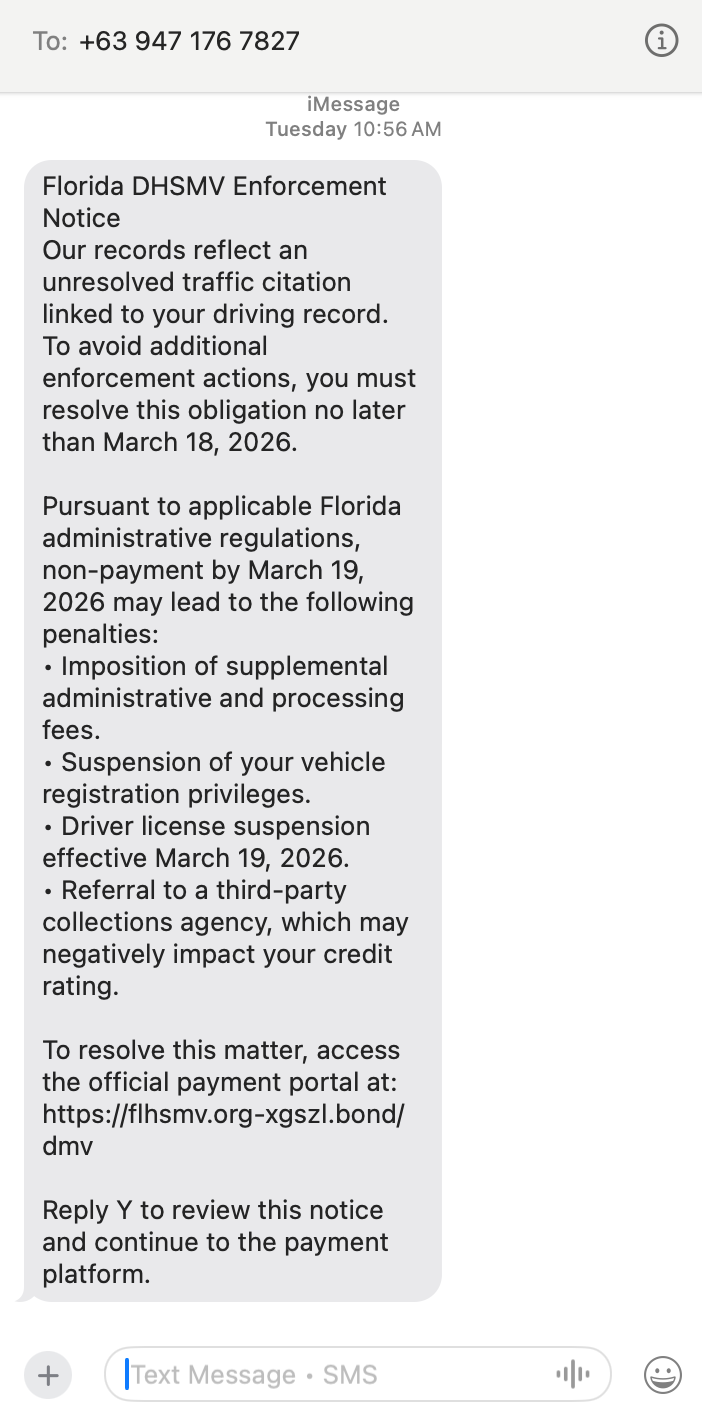
State DMV scams | Unresolved traffic citation, fees, license suspension | Wire transfer, bank info |
Scammers are always finding new ways to refine their schemes. It’s important to be aware of their tactics and ways to spot them.
Protect yourself from IRS scam calls
From your life savings to your lines of credit, falling prey to scammers can be devastating. Losses can be so great that some victims may never financially recover from them.
Learn moreFrequently asked questions
How do I tell a real from a fake IRS call?
What does the IRS actually do?
Aren’t seniors the most at risk?
What if I already called back the number in the voicemail?
How can I protect my finances from scammers?
This guide is published by OmniWatch. Follow OmniWatch on Facebook for ongoing guidance on identity protection, digital safety, and scam awareness.
†Restrictions and exclusions apply, click here to read full details of insurance coverage.
1 Federal Trade Commission, “FTC Data Show a More Than Four-Fold Increase in Reports of Impersonation Scammers Stealing Tens and Even Hundreds of Thousands from Older Adults”, (2025)
2 Internal Revenue Service, “How to know it's the IRS”, (2026)
3 PBS, “IRS is ending unannounced visits to taxpayers”, (2023)
4 Internal Revenue Service, “Dirty Dozen tax scams for 2026: IRS reminds taxpayers to watch out for dangerous threats”, (2026)