
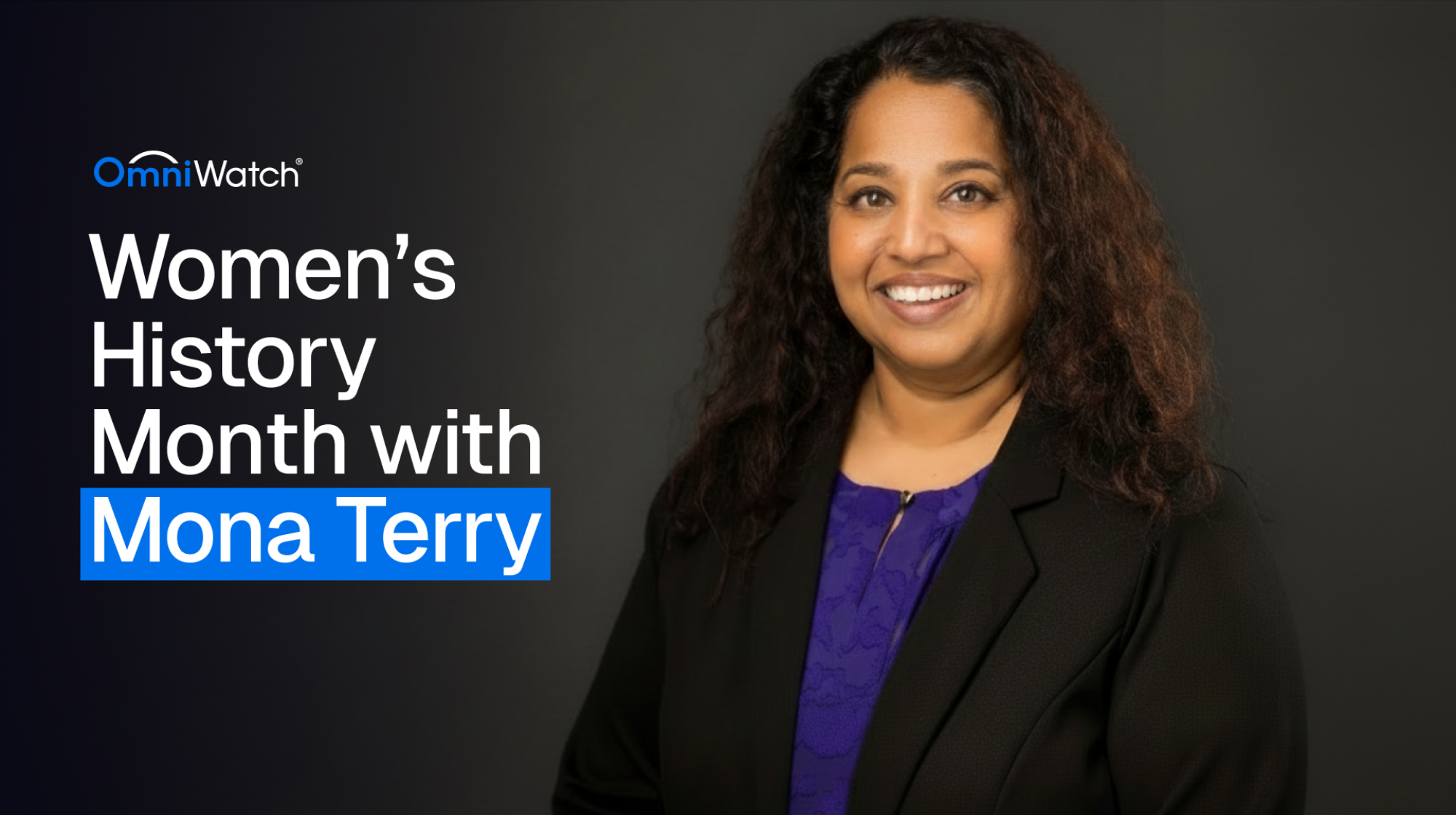
Women’s History Month spotlight: Mona Terry on protecting consumers from scams

An interview with identity theft expert Mona Terry on scams targeting older adults, warning signs families should watch for, and how victims can recover.
This Women’s History Month, OmniWatch is highlighting Mona Terry—Chief Operating Officer and Head of Victim Services at the Identity Theft Resource Center (ITRC), and an advisor to OmniWatch—whose work focuses on helping people navigate identity theft and fraud.
According to 2025 statistics, identity theft affects millions of Americans each year, impacting people across all age groups. Through her work, Mona helps people understand how scams operate, recognize warning signs, and take steps to protect themselves and their families.
In our conversation with Mona, we focused specifically on older adults—who often face unique risks, from impersonation scams to increasingly sophisticated, AI-driven fraud.
She shares insights on the scams seniors face most often, how identity theft recovery impacts victims beyond financial loss, and what families can do to better protect their loved ones.
- Seniors report higher rates of account takeovers and sensitive information exposure in scams
- Impersonation scams and tech support scams are among the most common threats
- AI is making romance scams and grandparent scams more convincing
- Warning signs can include sudden secrecy, large financial losses, or new online relationships requesting money
- Shame and embarrassment can prevent victims from reporting fraud, but support and recovery resources are available
Mona Terry on identity theft, scams, and protecting older adults
Are there certain types of identity theft that seniors experience more frequently than younger adults?
“Based on reports to the ITRC, older adults report higher instances of account takeover involving checking accounts and credit cards, sharing personally identifiable information (PII) in a scam, and being a victim of unauthorized access (“hacked”) to their computer or phone.”
What are the most prevalent scams targeting seniors right now that the ITRC is seeing through your helpline?
“The most prevalent scams reported are impersonation scams and tech support scams. Impersonation scams typically involve scammers posing as legitimate businesses, often by sending a fake invoice, and scammers pretending to be a legitimate financial institution, typically through phone calls.”
How have romance scams and grandparent scams evolved, and what makes them so effective against older adults?
“The biggest thing that has evolved with romance and grandparent scams is the use of AI to make the scammer look like the person they are pretending to be, and the use of AI by scammers based outside the U.S., whose primary language is not English, to sound like native English speakers. Because most of the interactions are online, and online dating is very common, a lack of familiarity with red flags for online dating, and the ability for the scammer to send private messages and isolate their victim, makes it easier for them to be effective.”
What warning signs should family members watch for that might indicate an elderly loved one is being scammed or has become a victim?
“The biggest warning signs are a large loss of money, a sudden need to be secretive about who they are talking to or what they are doing online, reports of a new friend or romantic interest who is “love-bombing” them (sending gifts, in constant communication, etc.) or asks for financial help repeatedly, or wants to remain a secret.”
How can seniors distinguish between legitimate communications from banks, government agencies, or healthcare providers and fraudulent attempts?
“The easiest way is to go directly to the source. Don’t be afraid to not engage with a call, text message, direct message on social media, or email. Instead, use a known and trustworthy website or phone number (not the one provided in the communication) to contact the institution directly and ask if they have sent the communication in question.”
What conversations should adult children have with their aging parents about protecting their identity and finances?
“These can be hard conversations to have, especially for older adults who are used to being very independent. I think it’s helpful to start with the prevalence of scams and fraud right now and to work together as a family so that everyone takes steps to protect their information and finances. Then it may not feel as targeted (and has the added bonus of awareness for the family).”
What unique challenges do senior victims face during the identity theft recovery process compared to younger victims?
“The recovery process is fairly similar for all victims. Challenges with using technology to report identity theft and provide proof can be a barrier. Identity theft that directly impacts funds can also be a bigger challenge for older adults who don’t have a way to secure additional financial assistance while the matter is being resolved.”
How does shame or embarrassment prevent seniors from reporting identity theft, and what can be done to address this?
“Sadly, shame and embarrassment are common emotions among all identity theft victims. Some of these thieves and scammers are just that good, and they continue to get better. This is a full-time job for them, and so many people are victims. At the ITRC, we like to know how the identity theft happened so we can warn others, but the bigger concern is to fix the issue and support the victim. Victims are not alone and chances are high that what happened to one older adult is happening to many.”
What resources or support systems are most helpful for seniors trying to protect themselves from identity theft?
“There are so many great local and national non-profit organizations and government agencies that are happy to provide information and support for older adults. We always encourage individuals to reach out to the ITRC as a starting point, and we’re happy to provide information on how to protect their identity and connect them to any other resources they may need.”
How can we empower seniors to feel confident in their ability to protect themselves without making them fearful of technology or daily interactions?
“The non-profit organizations and government agency support networks I mentioned above have a lot of great information. When in doubt, older adults can always lean on an expert to confirm or deny something they may be suspicious about. While scammers and identity thieves exploit technology to access information, there are a lot of great tools and resources available through technology to protect individuals as well.”
What's the most misunderstood aspect of identity theft recovery from a victim's perspective?
“At the ITRC, we hear frequently from victims that there is so much information out there that it is confusing. Victims don’t know where to start or what steps they should be following. It can feel really overwhelming. Taking one positive step is better than taking no steps, so we always encourage victims to either reach out and get step-by-step advice or, if they are uncomfortable reaching out, identify one thing they can do to take a positive step forward.”
On average, how long does it take victims to fully recover from identity theft, and what factors impact this timeline?
“It really depends on what type of identity theft they are dealing with and what accounts have been impacted. Accounts, such as checking accounts and credit card accounts, that are impacted by identity theft tend to be resolved within one to four weeks. Medical accounts, criminal identity theft, or even social media accounts impacted by identity theft tend to take much longer—anywhere from 3 months to a year or more.”
What emotional and psychological impacts do you see identity theft having on victims beyond the financial consequences?
“In the ITRC’s Consumer Impact Report, which will be released on October 28th, we cover a lot of the emotional and psychological impacts. Generally, victims feel violated, anxious, embarrassed, and fearful that it will happen again.”
Helping seniors stay protected from identity theft and scams
Awareness is one of the most powerful tools in the fight against identity theft.
By understanding how scams work—and by having open conversations within families—older adults can feel more confident recognizing suspicious activity and seeking help when needed.
Education, support networks, and identity protection tools all play a role in helping seniors stay safer in today’s digital world.
As Mona reminds victims navigating identity theft:
“Taking one positive step is better than taking no steps.” — Mona Terry
Learning how scams operate and taking proactive steps to monitor your information can make a meaningful difference.
Explore identity theft protection and scam monitoring with OmniWatch.
Explore OmniWatch