
 Call us at (877) 892-8249

QUICK ANSWER
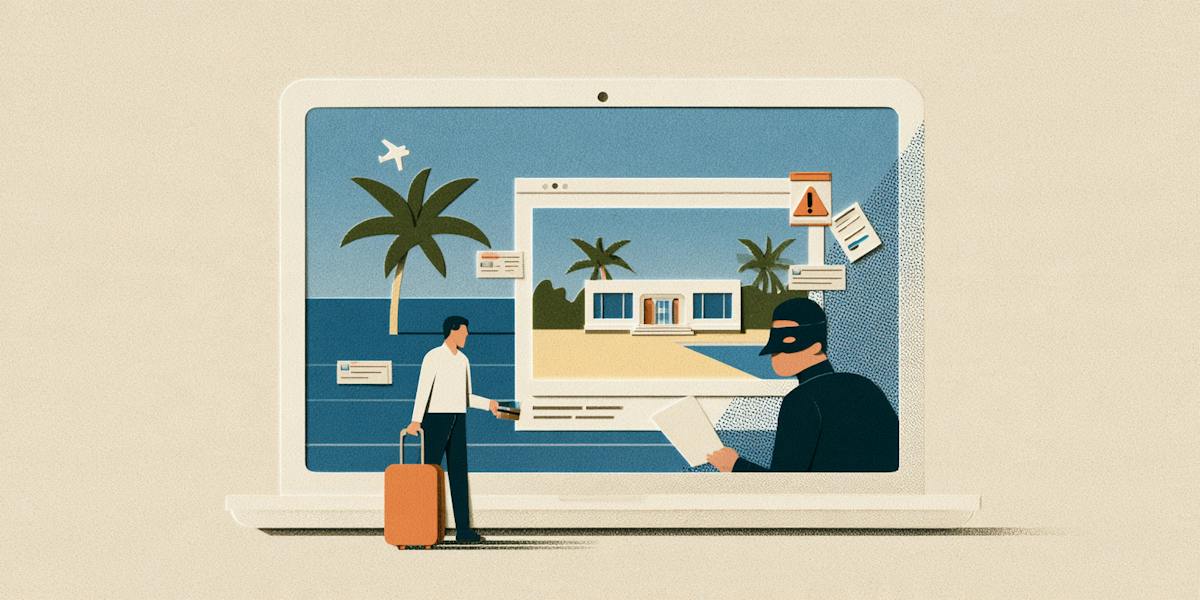
Holiday travel scams usually show up in one of three ways: a fake booking site, a vacation rental that doesn’t exist, or a message about a flight or hotel refund that you never asked for. The safest way to book is through the airline’s, hotel’s, or rental platform’s own website or app, typed in by you. Be cautious of any deal that’s far cheaper than everything else you’ve seen, and never pay a host by wire transfer or gift card. If you get a message about a cancellation or refund, skip the link and check your booking directly with the company.
Key takeaways
- Fake booking sites and rental listings often copy real ones closely, and a price that’s much lower than anything else is usually the hook.
- If a rental host asks to move the conversation off the booking platform, or wants payment by wire transfer or gift card, it’s time to walk away.
- Pressure to pay today, like “three other people are interested,” is a sales tactic, not a reason to rush.
- Messages about canceled flights or waiting refunds can be fake. Check your reservation in the company’s own app or website instead of using the link or number in the message.
- Paying with a credit card gives you more options to dispute a charge if a booking turns out to be fake.
- If you already paid, call your card issuer right away using the number on the back of your card.
You’ve been hunting for a postcard perfect cabin for your family’s holiday trip, and every place you like is already booked except for one listing that’s $200 cheaper than the rest. The host is friendly and quick to reply, but mentions that a few other people are interested, so you’ll need to pay today if you want it.
Real deals do pop up, but so do travel scams, and they tend to spike right when travel does. Popular dates sell out, prices climb, and people end up booking in a hurry, often on their phones between everything else they have going on. Scammers take advantage of that rush by copying real booking sites, posting rentals that don’t exist, and sending messages about refunds that were never owed.
Below, you’ll learn how to spot each of these scams, which payment methods give you more protection, and what to do if you’ve already paid.
Why do travel scams spike around the holidays?
Three things push travel scams up in November and December.
First, demand: more people book flights, hotels, and rentals in a short window.
Second, scarcity: when the good options sell out, an unusually good deal feels like luck instead of a warning.
Third, speed: travelers often book fast, on a phone, or between other tasks. Scammers design pages and messages to match that rhythm.
How exposed is your personal information?
Take our free risk quiz to see where your data may be exposed online.
Take the Risk Quiz
How fake booking sites work
A fake booking site is built to look like a real travel site, complete with flight searches, hotel photos, and vacation packages at prices that seem like a steal. You enter your card details, get what looks like a confirmation, and move on with your plans. Then you arrive at the hotel or the airport and find out there’s no reservation under your name, or the confirmation never shows up at all. Scammers usually lead people to these sites through ads, search results, and emails or texts with “limited-time” travel deals.
Whenever you can, book directly through the airline’s, hotel’s, or rental platform’s own website or app, and type the address in yourself instead of tapping a link. For more ways to check a site before you pay, here’s how to tell if a website is legit (pending). The FTC also shares tips to avoid scams when you travel¹.
Signs of a fake vacation rental listing
Fake rental listings are often built from real ones, using photos and descriptions copied from a property someone actually owns. That makes them hard to spot at first glance, but they usually give themselves away in a few ways.
The price is much lower than similar rentals nearby. Compare it with other listings in the same area for the same dates. The FTC² notes that rental scammers often advertise lower-than-average rates to get people to book before they think it through.
The photos show up somewhere else. Run the listing photos through a reverse image search. If the same pictures appear under a different address, a different host’s name, or a real estate site, they were likely copied.
The host wants to move the conversation off the platform. A message like “Let’s finish this over email or text” is often the step right before a payment request, and it takes you away from the platform’s own protections.
They ask for payment by wire transfer or gift card. Real hosts and rental platforms don’t take payment this way, because it’s nearly impossible to trace or get back.
You’re pressured to pay right away. A line like “three other people are interested” is meant to rush you. A real host will usually give you time to ask questions and book through the platform.
The listing has no track record. No reviews at all, or a handful of reviews that all sound the same, is a reason to look elsewhere
How do airline and hotel refund scams work?
These scams tend to land when you’re already on edge about a trip. An email arrives saying your flight was canceled and you’re owed a refund, or a text warns that there’s a problem with your hotel reservation and you need to act quickly to keep it. Some come as phone calls from someone claiming to work for the airline. They’re especially convincing during busy travel weeks, when real delays and cancellations are happening and a message like this doesn’t seem out of place.
From there, the scam goes one of two ways. If the message includes a link, it usually leads to a page that looks like the airline’s or hotel’s site and asks you to “confirm” your card number or log in to your account. If it includes a phone number, the person who answers may ask you to pay a rebooking fee, share a password, or let them access your device to “process” the refund. It’s the same playbook behind most phishing emails, smishing texts, and vishing calls, just dressed up for travel season.
Whatever the message says, don’t use the link or phone number it gives you. Your reservation details live in the company’s own app and website, so that’s where to check whether anything has really changed. If you’d rather talk to someone, call the number listed on your booking confirmation or the company’s official site. Be careful with numbers that show up in search results, too, since scammers sometimes post fake customer service numbers (pending) that look like the real thing.
Stay safe with scam protection
Fake flight cancellations and hotel booking alerts are built to look like the real thing. OmniWatch Scam Protection helps you check suspicious texts, emails, and links before you reply.
Explore Scam ProtectionPayment methods that are safer when you book
How you pay changes what you can ask for if a booking falls through. Protections vary by method, by bank or app, and by what happened, so use this as a starting point.
Credit card. Federal law lets you dispute billing errors, including charges for services you never received, if you notify your issuer within 60 days of the statement (Fair Credit Billing Act, 15 U.S.C. § 1666).3 Limits and conditions apply.
Debit cards, bank transfers, and payment apps. Rules differ by provider and can be less favorable when you authorize the payment yourself.
Wire transfers and gift cards. Avoid them. The FTC says anyone who demands payment by gift card is likely a scammer.4
Is public Wi-Fi safe when you travel?
Travelers use airport, hotel, and café networks constantly, and those networks are public Wi-Fi (pending). That's a good reason to be careful about what you log in to and to avoid entering payment details on a network you don't trust.
What to do if you were scammed?
Call your card issuer or bank with the number on your card. Tell them what happened and ask about your options.
Contact the real company. If you suspect a fake refund or booking message, confirm your booking through the company's own app or site.
Save the evidence, including listing, messages, and payment confirmations.
Change reused passwords, and turn on multi-factor authentication.
Report it to the FTC. You can also use BBB Scam Tracker.5
If you shared a Social Security number, passport details, or other ID information, follow the steps in our guide on how to report identity theft (pending), and see how scammers steal identities.
Check a Booking Link With OmniWatch

The moment right before you pay for a trip is usually when the pressure is highest. The rental looks perfect, the flight price might jump, and the host is waiting on your answer. If you’re an OmniWatch member with included scam protection, that’s a good time to run the booking link, the host’s email, or a screenshot of the listing through the AI Scam Checker. You’ll get a quick read on whether it looks likely safe, unverified, likely spam, or a scam, so you can decide whether to book or keep looking.
Just keep in mind that the checker can’t confirm a rental actually exists or that a host is who they say they are. For that, the steps above still matter most, especially booking through the platform and never paying by wire transfer or gift card.
Frequently Asked Questions
How can I tell if a vacation rental is fake?
Compare the rate with similar nearby listings, search for the photos to see if they appear elsewhere, and be wary of a host who wants to move off the platform or be paid by wire transfer or gift card. A listing with no history or pressure to pay today is another warning sign.
Is it safe to book travel through a link in an email?
It's safer to go to the company's own site or app by typing the address yourself. Links in unexpected emails or texts can lead to look-alike pages that collect your card or login details. If you got a booking email you didn't expect, check your reservation in the company's app.
How do airline refund scams work?
A message claims a flight changed or a refund is waiting, then points you to a link or phone number that collects your card, login, or payment. Ignore the contact details in the message. Check your booking in the airline's app or site, and use the number on your confirmation.
What is the safest way to pay for travel?
Credit cards come with federal dispute rights for billing errors, subject to time limits. Debit cards, bank transfers, and payment apps work under different rules. Avoid wire transfers and gift cards, which the FTC and others warn are what scammers ask for. No one can promise a refund.
What should I do if I paid a fake booking site?
Call your card issuer using the number on your card, save your evidence, change reused passwords, and report it at ReportFraud.ftc.gov. Confirm any real bookings directly with the airline or hotel. No one can promise a refund, but acting quickly gives you the most options.

This guide is published by OmniWatch, an identity and scam protection company. Follow OmniWatch on LinkedIn for ongoing guidance on identity protection and digital safety.
Sources
1. Federal Trade Commission, "Avoid Scams When You Travel". https://consumer.ftc.gov/articles/avoid-scams-when-you-travel
2. Federal Trade Commission Consumer Alert, "Getting a vacation rental? Watch out for scams," July 2018. https://consumer.ftc.gov/consumer-alerts/2018/07/getting-vacation-rental-watch-out-scams
3. Cornell Law School Legal Information Institute, 15 U.S.C. § 1666, Correction of billing errors. https://www.law.cornell.edu/uscode/text/15/1666
4. Federal Trade Commission, "Gift Card Scams". https://www.ftc.gov/giftcards
5. Better Business Bureau, BBB Scam Tracker. https://www.bbb.org/scamtracker