
 Call us at (877) 892-8249
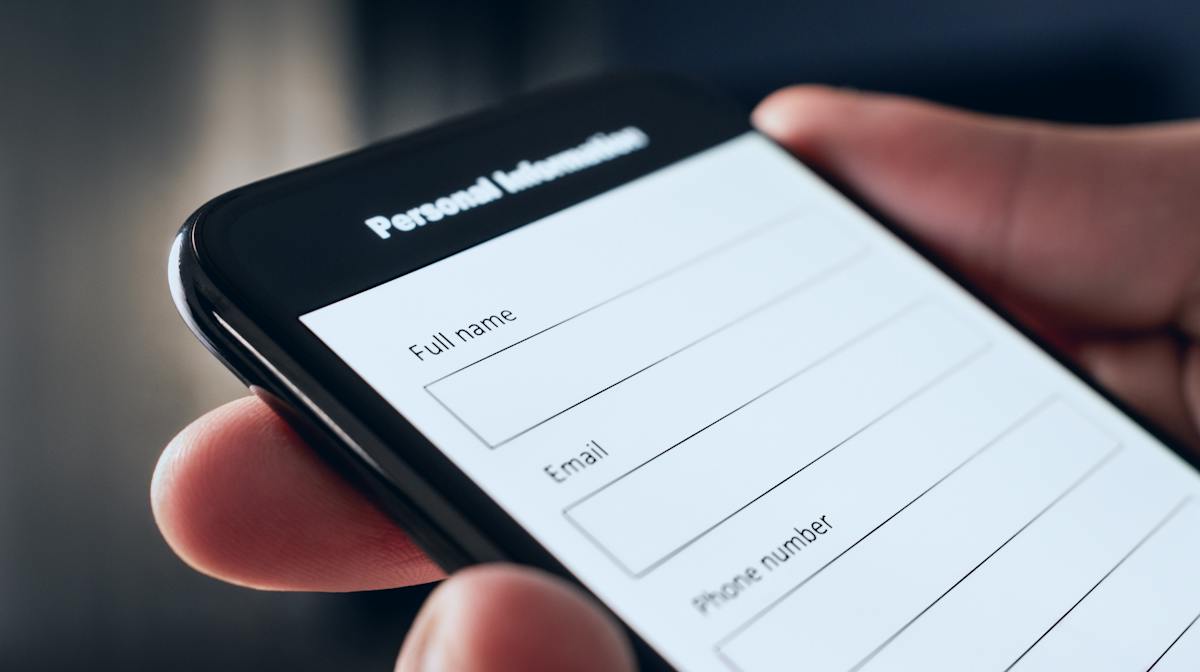
Discovering that your details are for sale in a hidden corner of the internet is unsettling, and the natural first question is how they got there.
The answer is rarely a single dramatic hack. More often it is the quiet aftermath of a breach you had no part in.
This guide, updated for 2026, walks through the common pathways, the current state of the marketplaces where stolen data changes hands, the ways artificial intelligence has raised the stakes, and the concrete steps that limit the damage.
Key takeaways
- Personal data most often reaches the dark web through corporate breaches, phishing, malware, and resale between criminal groups
- Victims frequently have no idea their data was exposed, sometimes for months or years after the original breach
- Dark web marketplaces operate like online stores, with vendor ratings, reviews, and bulk pricing for stolen data
- Artificial intelligence now makes leaked data more dangerous, powering more convincing phishing and voice-cloning scams (or deepfakes)
- Data can’t be pulled back once it’s listed, but freezing credit, changing passwords, and monitoring sharply limit the harm
What is the dark web?
The dark web is a section of the internet reachable only through specialized software such as The Onion Router (Tor). It works as an anonymous network where people can communicate and visit sites without being easily tracked, and those sites can’t be reached through ordinary browsers like Chrome or Microsoft Edge.
Its anonymity supports legitimate uses, including secure communication between journalists and their sources, and censorship-resistant access to services in restrictive countries. Even Facebook maintains a version reachable through Tor for that reason. The same anonymity, though, makes it a natural venue for trading stolen data and illicit goods, and simply visiting unfamiliar dark web sites can expose your device to malware.
How does stolen personal information end up on the dark web?
Personal information typically reaches the dark web through one of four pathways: large-scale corporate data breaches, phishing attacks aimed at individuals, malware that harvests credentials from infected devices, and the resale of data between criminal groups. Once stolen data enters these markets, it is bought and sold, frequently without victims ever learning their information was taken. Continuous dark web monitoring from OmniWatch alerts you the moment your details appear, so you can act before the exposure turns into fraud.
How did my personal information end up on the dark web?
There are several routes. The most common is a corporate data breach, where attackers break into a company's systems and copy customer records, including names, passwords, and Social Security numbers, then sell them. A second route has grown more common: ransomware groups that steal data before locking a victim's systems, then threaten to publish it if the company refuses to pay. Rather than simply encrypting files, they use the stolen records as pressure, and dump them publicly when demands are not met. A third route is plain human error, such as an employee leaving a database exposed online or sending a sensitive file to the wrong place. In each case, the exposure usually begins far from the individual whose data is affected.
Here’s how the main pathways compare, and what each one means for you.
How it happened | What usually leaks | Your first move |
Corporate data breach | Names, emails, passwords, sometimes Social Security numbers | Change the password, then check whether you reused it anywhere else |
Ransomware and extortion | Whatever the company held, dumped publicly if they don’t pay | Watch for the breach notice and treat everything in it as exposed |
Phishing | Logins and payment details you typed in yourself | Change the login immediately and turn on two-factor authentication |
Malware on your device | Saved passwords, cookies, autofill data | Run a security scan, then reset every saved password |
Human error | Anything in a misconfigured database or misdirected file | Same as a breach, and don’t assume it was small |
Whatever the route, the cleanup starts the same way. Our guides to what to do if your email, password, or Social Security number turns up on the dark web cover the specifics.
How people buy and sell your data on the dark web
Stolen information changes hands on forums and marketplaces that resemble legitimate online stores, complete with vendor ratings, customer reviews, and bulk discounts. The landscape shifts constantly. Early marketplaces such as Silk Road and AlphaBay were shut down years ago, and law enforcement has kept up the pressure since. In June 2025, United States authorities seized BidenCash, one of the largest markets for stolen payment cards, taking down roughly 145 associated domains.1 Around the same time, an international operation dismantled the long-running Archetyp market.
The pattern that follows every takedown is displacement rather than disappearance. When one market falls, its users migrate to successors within weeks, and demand for stolen data persists. After the Archetyp seizure, activity shifted toward newer markets such as TorZon. Several of today's markets specialize specifically in breached credentials and the logs produced by password-stealing malware, which keeps a steady supply of emails, passwords, and identity details in circulation. It’s also why you can’t remove your information from the dark web once it’s there: the copies outlive any single marketplace.
How AI has raised the stakes in 2026
The newest shift is not where stolen data is sold, but what criminals can do with it. Generative AI has made it cheap to turn a leaked email address or phone number into a convincing, personalized attack. A scammer who once sent clumsy mass emails can now generate flawless messages at scale, and can clone a familiar voice from a few seconds of audio to make a phone call sound authentic. The financial toll is already visible. The FBI's Internet Crime Complaint Center logged more than 22,000 complaints referencing artificial intelligence in 2025, tied to about $893 million in losses, part of a record $20.9 billion in total reported cybercrime losses that year.2 Leaked personal data is the raw material for these schemes, which is why keeping that data from being useful matters more than ever. Layered scam protection that screens suspicious messages adds a defense against the AI-crafted lures that often follow a leak.
How can I protect myself from dark web data breaches?
No one can be fully shielded from a breach, because personal data already sits in government databases, credit bureaus, banks, and countless company records. The practical goal is to be a harder target and to catch exposure early. Five steps make the biggest difference.
Strengthen your passwords. Use long, unique passwords or passphrases that do not spell recognizable words, and let a password manager generate and store them so reuse is never a temptation.
Turn on two-factor authentication. Add a second factor to every important account, and favor an authenticator app over text-message codes, since phone numbers can be hijacked.
Use dark web monitoring. Companies are often slow to disclose breaches, and the Identity Theft Resource Center found that about 69% of breach notices in the first half of 2025 gave no information about how the breach happened.3 Continuous monitoring closes that gap. OmniWatch scans dark web sources around the clock and alerts you the moment your details appear, and pairs that with credit monitoring that flags new accounts opened in your name.
Avoid real answers to security questions. Details like your birthplace are easy to find online, so treat security answers like passwords and store invented ones in your manager.
Act immediately after a breach notice. Change affected passwords, review recent account activity, and if a Social Security number was exposed, freeze your credit with all three major bureaus and report the misuse at the federal government's official recovery site, IdentityTheft.gov. Running a free dark web scan first shows exactly which details are exposed, so your effort goes where it counts.
Ready to see what’s already out there?
You can’t undo a breach, but you can find out what it exposed and shut it down before someone uses it. A free scan takes seconds.
Run my dark web scanFrequently asked questions
How do hackers steal personal information?
The most common methods are phishing messages that trick people into revealing logins, malware installed through malicious links or downloads, and breaches of companies that store consumer data. Credential stuffing, which reuses leaked username and password pairs across sites, is also widespread. Phishing remains among the most reported cybercrimes year after year.
How do I know if my data is on the dark web?
Many people find out only after fraud appears, such as an unfamiliar charge or a new account on their credit report. A more proactive route is a dark web monitoring service that continuously scans for your email, Social Security number, and other identifiers, then alerts you when they surface. OmniWatch monitors the dark web around the clock and sends real-time alerts.
What should I do if my personal information is on the dark web?
Change passwords on affected accounts, starting with email and banking. Place a fraud alert or credit freeze with Equifax, Experian, and TransUnion. If a Social Security number was involved, report it at IdentityTheft.gov and keep records of every step, since that documentation supports any identity theft insurance claim.
Can stolen data be removed from the dark web?
Generally no. Once information is posted to these markets, it cannot be recalled the way a web page can be deleted, because copies spread across anonymous servers. What you can control is the damage: monitor your credit, freeze it, change compromised passwords, and work with an identity protection service to manage ongoing threats.
How worried should I be about my personal information on the dark web?
It depends on what leaked. An old password you no longer use is low risk. A current password, a Social Security number, or bank details need action today. Not sure where you stand? The OmniWatch risk quiz takes about two minutes.

Sources
1. Cyberpress, U.S. authorities seize BidenCash and 145 domains: https://cyberpress.org/u-s-authorities-take-down-145-dark-web-marketplaces/
2. FBI Internet Crime Complaint Center, 2025 Internet Crime Report: https://www.ic3.gov/AnnualReport/Reports/2025_IC3Report.pdf
3. Identity Theft Resource Center, H1 2025 Data Breach Report analysis: https://www.idtheftcenter.org/post/h1-2025-data-breach-report-data-breach-trend-continues/
This guide is published by OmniWatch. Follow OmniWatch on Facebook for ongoing guidance on identity protection, digital safety, and scam awareness.